MTL vs DTL, the right draw when cigarettes are your reference
Every guide says the same thing. Mouth to lung is a two-stage draw and direct to lung a single one. That is accurate, and of no help whatsoever when you have to choose. What actually decides the MTL vs DTL question, for anyone whose reference point is a cigarette, are the knock-on effects on liquid use, battery life and nicotine strength. Here is the duel, criterion by criterion.
MTL vs DTL, the one line verdict
Mouth to lung, or MTL, wins clearly. It reproduces the draw resistance of a cigarette, uses less liquid, lasts longer on a charge and lets you cover your needs with a standard nicotine strength rather than a low one compensated by volume.
Direct to lung, shortened to DTL or simply DL, keeps its appeal, but for a different purpose. It produces a lot of vapour on bigger hardware, with a consumption profile of its own, so judging it against MTL on everyday criteria compares two objects that do not do the same job.
How each draw works
Before the table, it helps to picture what happens in each case, because the whole comparison flows from the path the vapour takes and the hardware built around it.
The two-stage MTL draw
In an MTL draw, the vapour is first held in the mouth and then inhaled in a second movement. The airflow is narrow, so the device pushes back slightly as you draw, much as a cigarette does.
That resistance is not a side effect, it is the whole point. It slows the draw, keeps the amount of vapour modest and concentrates the flavour, which is why so many compact devices are designed around it.
The single-breath DTL draw
In a DTL draw, the vapour goes straight to the lungs in one breath, through a wide open airflow with almost no resistance. It feels closer to breathing in than to drawing on something.
Producing enough vapour for that means heating more liquid at once. Lower resistance coils, more power and larger airflow slots follow, and each of those choices carries a cost further down the line.
MTL vs DTL on five everyday criteria
The five rows below are the ones you notice in the first week. Values are orders of magnitude seen on common hardware, and they vary with individual habits.
| Criterion | Mouth to lung (MTL) | Direct to lung (DTL) |
|---|---|---|
| Feel | draw resistance close to a cigarette | wide airflow, no resistance |
| Liquid used | low, a few millilitres a day | several times more, on bigger tanks |
| Battery life | a day on a small battery | frequent charging, heavier batteries |
| Useful nicotine | a standard strength is enough | a low strength imposed by the volume inhaled |
| Discretion | light vapour that clears quickly | dense, visible vapour |
The most decisive row is nicotine. In MTL, a strength of 9 mg/ml covers most needs, while in DTL the sheer volume of vapour forces you lower, even if that means more puffs to reach the same satisfaction.
British rules frame that choice as well. Under the Tobacco and Related Products Regulations 2016, nicotine e-liquid is capped at 20 mg/ml, and within that ceiling MTL users sit on the standard strengths while DTL users stay at the low end.
What the draw changes in running costs
On any vape, liquid use is the item that widens the gap. A tight draw empties a tank slowly, an airy draw empties it in a few hours, and spending follows in the same proportion.
UK rules make the difference visible very quickly. Nicotine refill bottles are limited to 10 ml and tanks to 2 ml, so a DTL setup means refilling several times a day and opening new bottles far more often than an MTL one ever would.
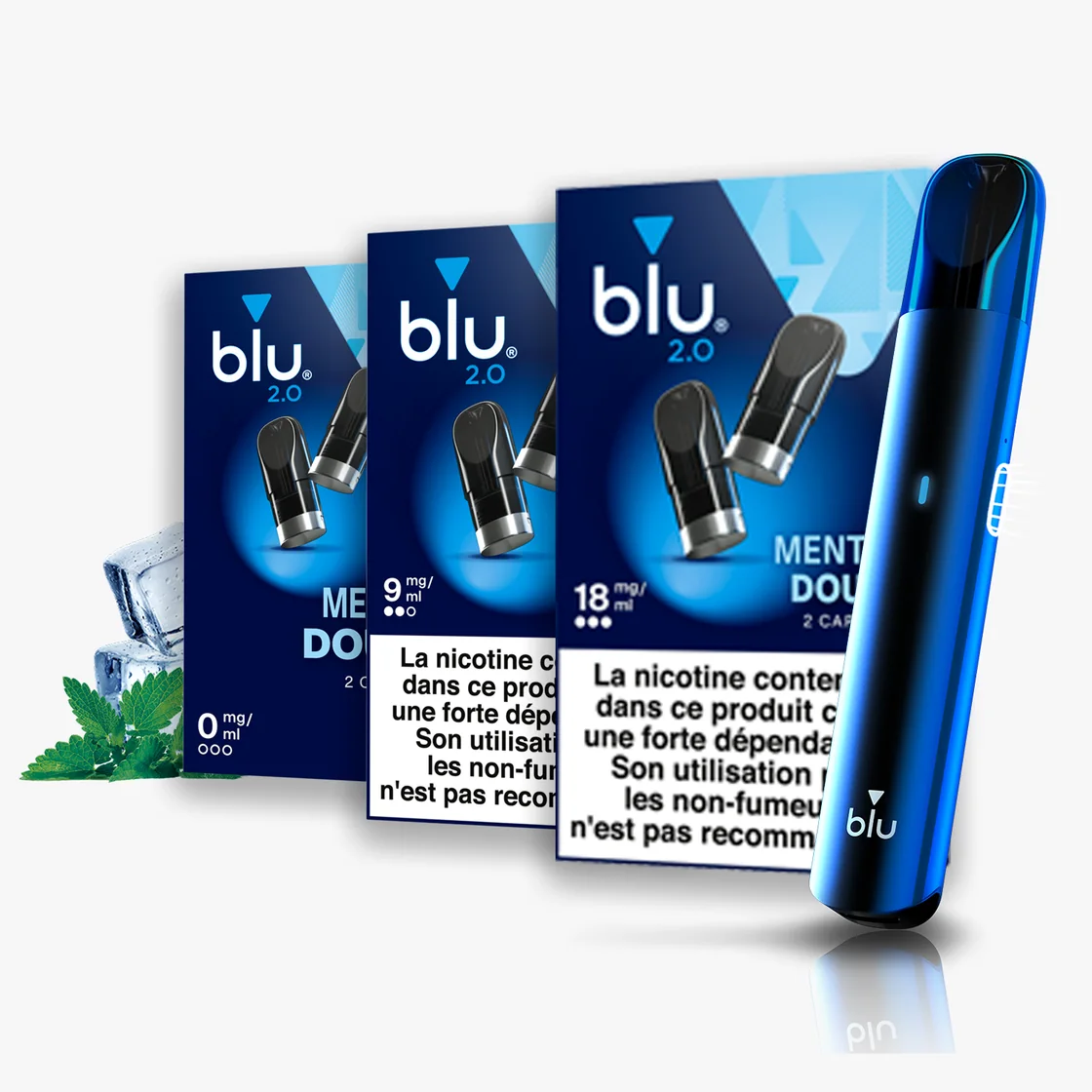
On a capsule device, the arithmetic is done per unit. Makers quote a capsule capacity and an indicative number of puffs, figures that vary with habits, and the budget becomes predictable, which is rarely true of direct lung vaping.
The other item, less visible, is consumables. MTL on a capsule needs neither a separate coil change nor a power setting, whereas direct lung hardware demands regular upkeep, as our comparison of the Voopoo Drag H40 and the Drag X3 box shows in detail.
Why compact capsule devices lean towards MTL
It is no coincidence that compact vapes are almost all built for a tight draw. Their airflow is narrow, their coil runs at low power and they fire as you inhale, with no button to hold.
The heating parts of these devices, whether a ceramic chamber or a fine mesh, are tuned for that regime, with little vapour, plenty of flavour and contained consumption. Anyone comparing shapes and sizes should start from that logic rather than from the look of the device.
One point needs care. Capsules are generally tied to a single device family and do not swap between them, so check which capsule a device takes before buying it, and before stocking up on refills.
Picking an MTL device, three things to check
Once the draw is chosen, a handful of practical criteria separate one MTL device from another. None of them needs a spec sheet crowded with figures.
Draw activation or a button
Draw activation fires the device as you inhale, which mirrors the gesture of a cigarette. A button adds a step but gives more control, and some pods offer only one of the two, so read the product page before ordering.
Adjustable airflow
A small airflow ring or slider lets you tighten or loosen the draw. It is the simplest way to fine-tune the resistance you feel without changing hardware, and it gives some room to move if the first setting feels too restricted.
Prefilled capsules or refillable pods
Prefilled capsules remove any handling of liquid, while refillable pods let you choose your own e-liquid. With nicotine refill bottles limited to 10 ml in the UK, a refillable MTL pod still works through a bottle slowly, because the draw uses so little.
Where DTL still makes sense
Direct lung vaping is not a lesser choice, it is a different one. It suits people who want dense vapour and are happy to manage bigger tanks, more frequent charging and a lower nicotine strength.
That trade makes sense for experienced vapers who enjoy the hardware for its own sake. It makes far less sense when the aim is a device that disappears into a pocket and feels familiar in the hand.
Where you vape matters too. Vaping is not covered by the UK smoke-free law for enclosed spaces, so venues, employers and transport operators set their own policies, and a dense DTL cloud is much harder to keep discreet wherever vaping is tolerated.
Frequently asked questions
Five questions that the comparison above leaves open.
Can one device do both MTL and DTL?
Some devices with adjustable airflow and interchangeable coils can stretch to a restricted lung draw, halfway between the two, but a device built for one style rarely excels at the other. Compact capsule devices are almost all designed for MTL.
What is a restricted lung draw?
Often shortened to RDL, it sits between the two styles, with a looser draw than MTL but more resistance than full DTL. It suits people who find MTL too tight without wanting large clouds.
Why does DTL call for a lower nicotine strength?
Because the volume of vapour taken with each puff is much larger. A strength that feels right in a tight MTL draw becomes far too strong in a large DTL one, so direct lung vapers move to the bottom of the scale.
Do MTL and DTL need different e-liquids?
Usually, yes. Thinner liquids tend to suit the narrow airflow and small coils of MTL devices, while thicker, vapour-heavy liquids are made for the larger coils of DTL hardware. Check the device maker’s guidance on the coil you use.
Can I take an MTL pod on a plane?
Yes, in cabin baggage only and never in the hold, along with any spare batteries, which must be protected against short circuits. Vaping on board is not allowed.
MTL vs DTL, what this duel settles
Across the five criteria, the tight draw wins four rows and draws level on the fifth. For someone whose reference point is a cigarette, choosing MTL means finding a familiar gesture, with liquid use and running costs kept under control.
Direct lung remains a choice of style, to be judged on criteria other than the ones gathered here. On the MTL vs DTL question, the draw you already know is the sensible place to start.
Related reading
- Vaporesso GTX One Pro vs Voopoo Drag S3, the 3000 mAh duel
- Lost Vape Centaurus M200 against the Thelema Q200 Pro
Written for an adult audience. Nicotine is highly addictive, vaping products may not be sold to under-18s in the United Kingdom, and this editorial comparison is not a recommendation to buy any device.